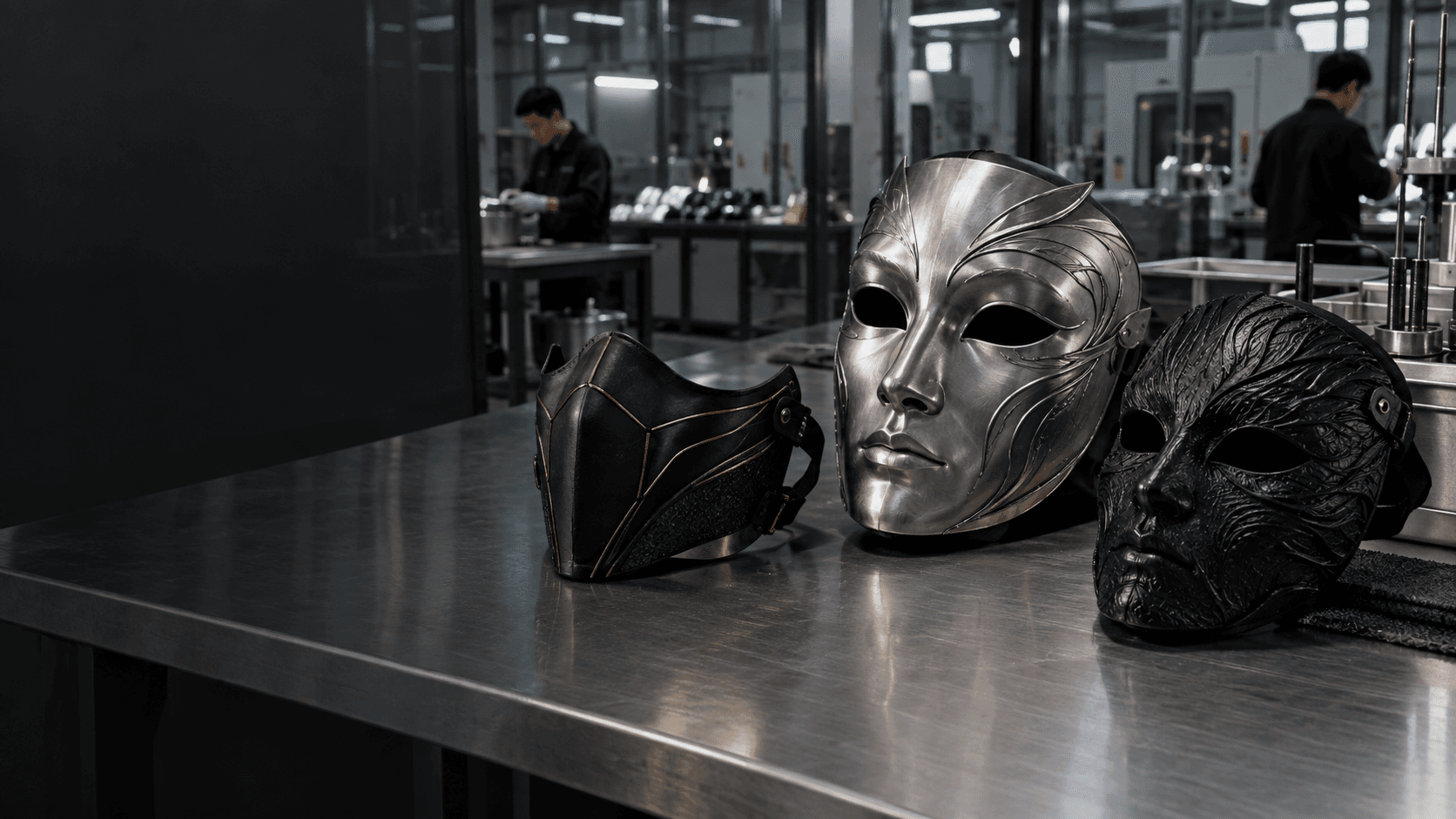
A strong custom mask project begins with the decisions that make a design manufacturable. This guide is designed as a professional long-form article template: replace the examples with your project experience, buyer requirements and factory evidence while keeping the structure clear for readers and search engines.
1. Start with a usable project brief
A buyer does not need a fully engineered specification before approaching a factory. A clear reference image, a target quantity, intended use and delivery market are often enough to begin a productive conversation. The goal is to give the factory a direction while leaving room for practical recommendations on construction, materials and finishing.
For private-label and retail programs, define the product story as well as the appearance. Will the mask be worn, displayed, collected or given away at an event? The answer affects weight, edge treatment, attachment points, packaging and the quality level that should be discussed before sampling.
Include reference images, intended use, quantity range, target market, timing, branding requirements and any known material, packing or compliance needs.
2. Match materials to the application
Material is not just an aesthetic choice. Resin can support sculpted detail and varied surface finishes; EVA can work where a lighter, more flexible piece is needed; PU and fabric may suit specific comfort or visual directions. Mixed-material builds can add contrast, but they also require a clear assembly method and test points.
When discussing materials, ask the factory to explain the trade-offs rather than simply naming a preferred option. A good recommendation links a material choice to the product’s intended use, target finish and production realities.
3. Use samples to make decisions
A sample gives every stakeholder a shared reference. It is the right moment to check silhouette, scale, comfort, surface feel, colour, logo placement and any details that cannot be judged from a rendering alone. For projects with more than one finish or packaging element, clarify which parts are being approved in the sample stage and which will be confirmed through production references.
Document feedback in a format that production can follow. Instead of saying “make it better,” identify the feature, location and expected result. For example: “reduce the gloss on the forehead panel to match the approved reference,” or “move the logo 5 mm lower from the top edge.” Specific feedback reduces interpretation and makes the next sample more useful.
4. Plan inspection and packing early
Shipment inspection is most effective when the acceptable standard was discussed before bulk production. The approved sample, agreed workmanship points and packing requirements become the reference for final review. Typical checks may include surface finish, colour consistency, logo placement, accessories, count and carton markings.
Packing should be treated as part of the product experience. Protective inserts can prevent surface contact; individual bags can keep sets organised; retail boxes and labels should be checked against the intended distribution route. If the order will be collected by a forwarder, carton dimensions, marks and handover timing should be confirmed early enough to avoid last-minute changes.
5. Ask the questions that prevent rework
Before a quote or sample is approved, make the open decisions visible. The most useful questions are usually practical: what is the target quantity, which detail is critical, when is the required delivery date, and how will the product be packed and delivered? Clear answers help both buyer and factory choose the right next step.
- Which reference detail is non-negotiable for your brand or campaign?
- Does the product need to prioritise comfort, display impact or repeated retail consistency?
- Who gives final sample approval, and how will feedback be documented?
- What packing and carton marks are required before the order is released?
Conclusion
Custom mask sourcing works best when design intent, production decisions and handover requirements are visible from the start. Use this template to organise a buyer-focused article, then add your own factory testing notes, shipment inspection examples, product application details and customer requirements to make it genuinely useful to your audience.
Need a practical production route?
Share the first version of your brief. We will help identify the choices that should be confirmed before sampling.
Email MaskVox